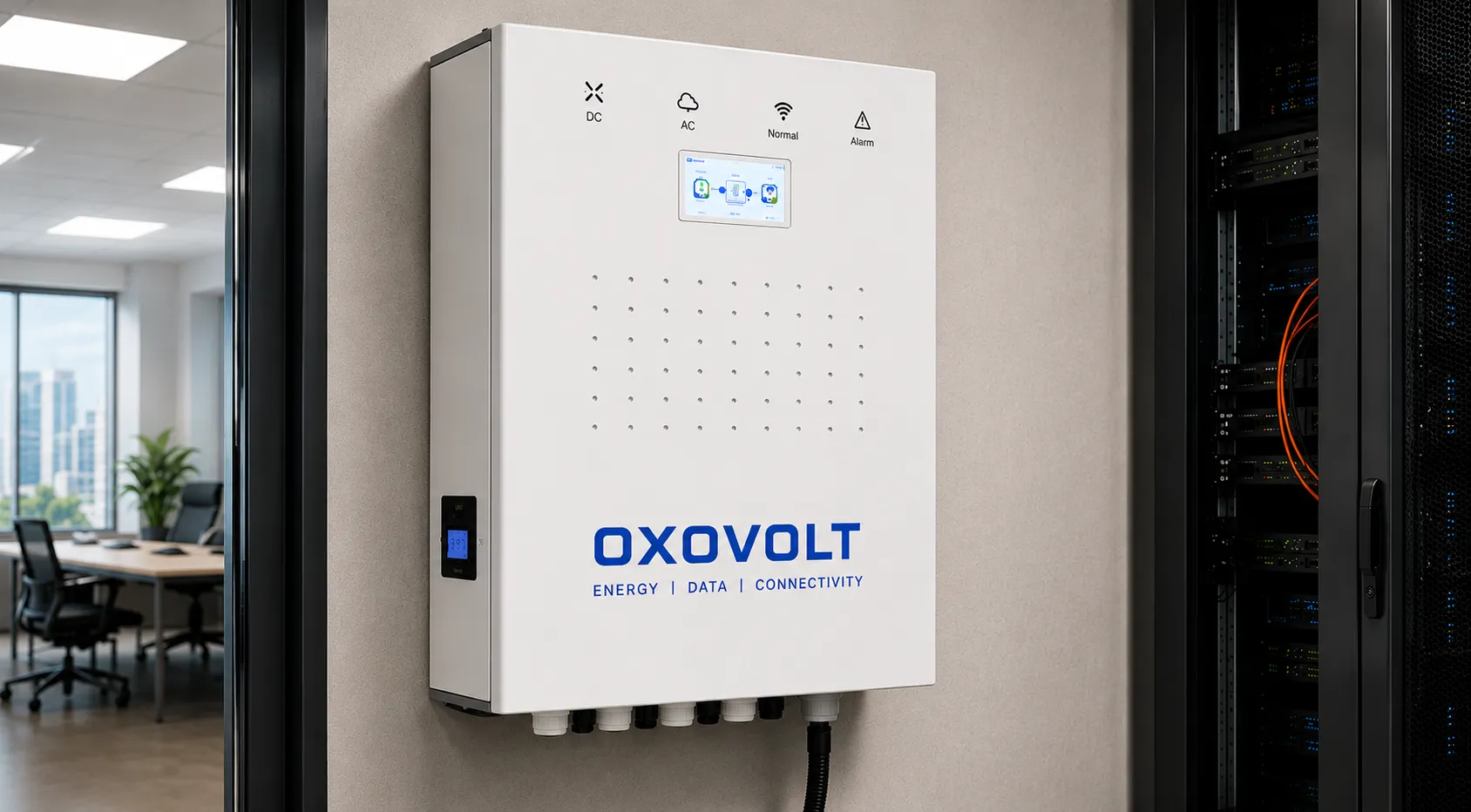
A practice does not stop because one thing failed. It stops because the thing that failed was the one nobody had made redundant.
The usual approach buys three products from three vendors: an inverter for energy, a NAS for data, a router for connectivity. Each one is individually reasonable. The failure always happens in the space between them, where no vendor is responsible.
One orchestrator, three domains
- Energy : the load is carried through dips and peaks without a handover.
- Data : storage stays local, powered, and consistent — no write is left half-finished.
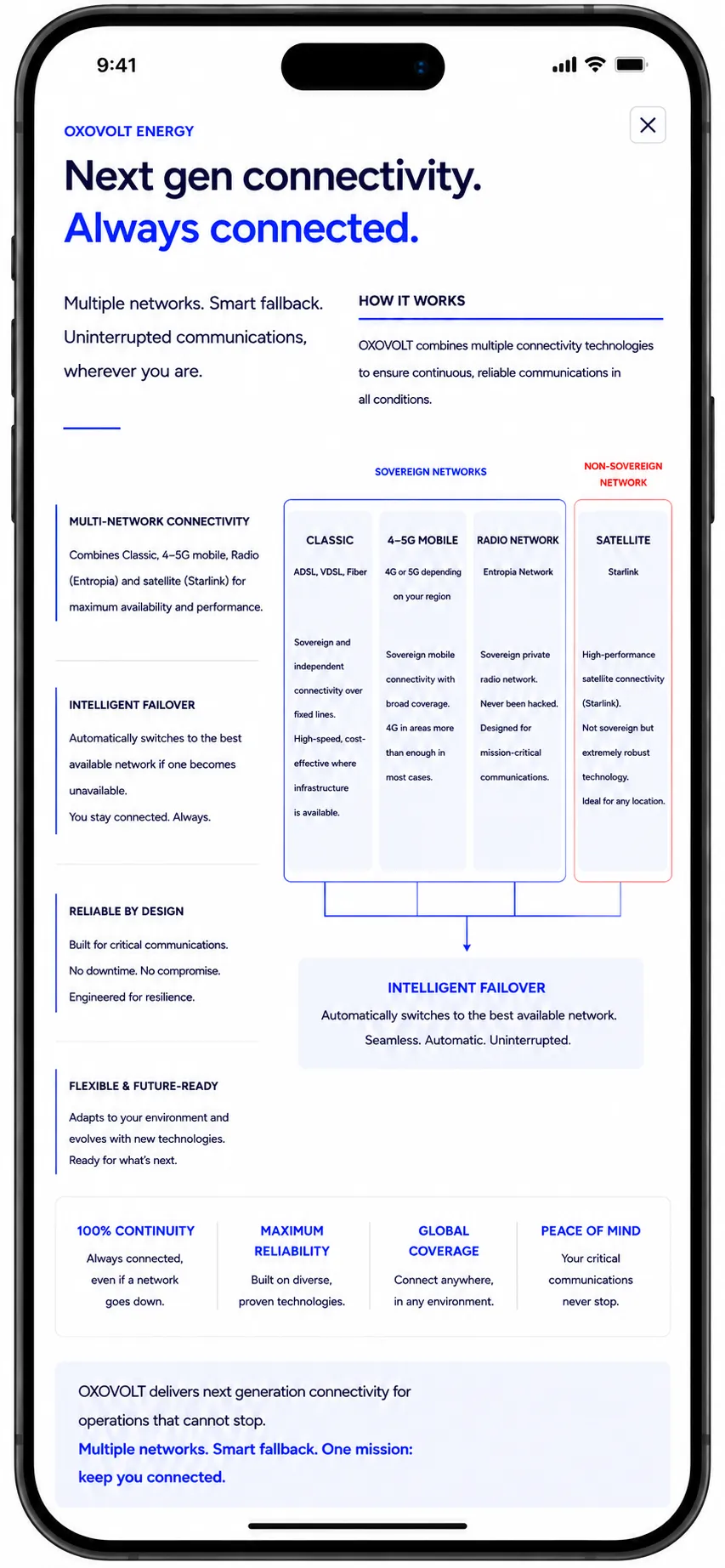
- Connectivity : the link fails over on its own, before anyone opens a ticket.
Designed as one system, the three domains share the same power, the same monitoring and the same failure model. That is the whole point: continuity is not the sum of three products, it is a property of how they were put together.
Continuity is not a feature you add. It is a decision you make at the architecture stage.Explore the architecture