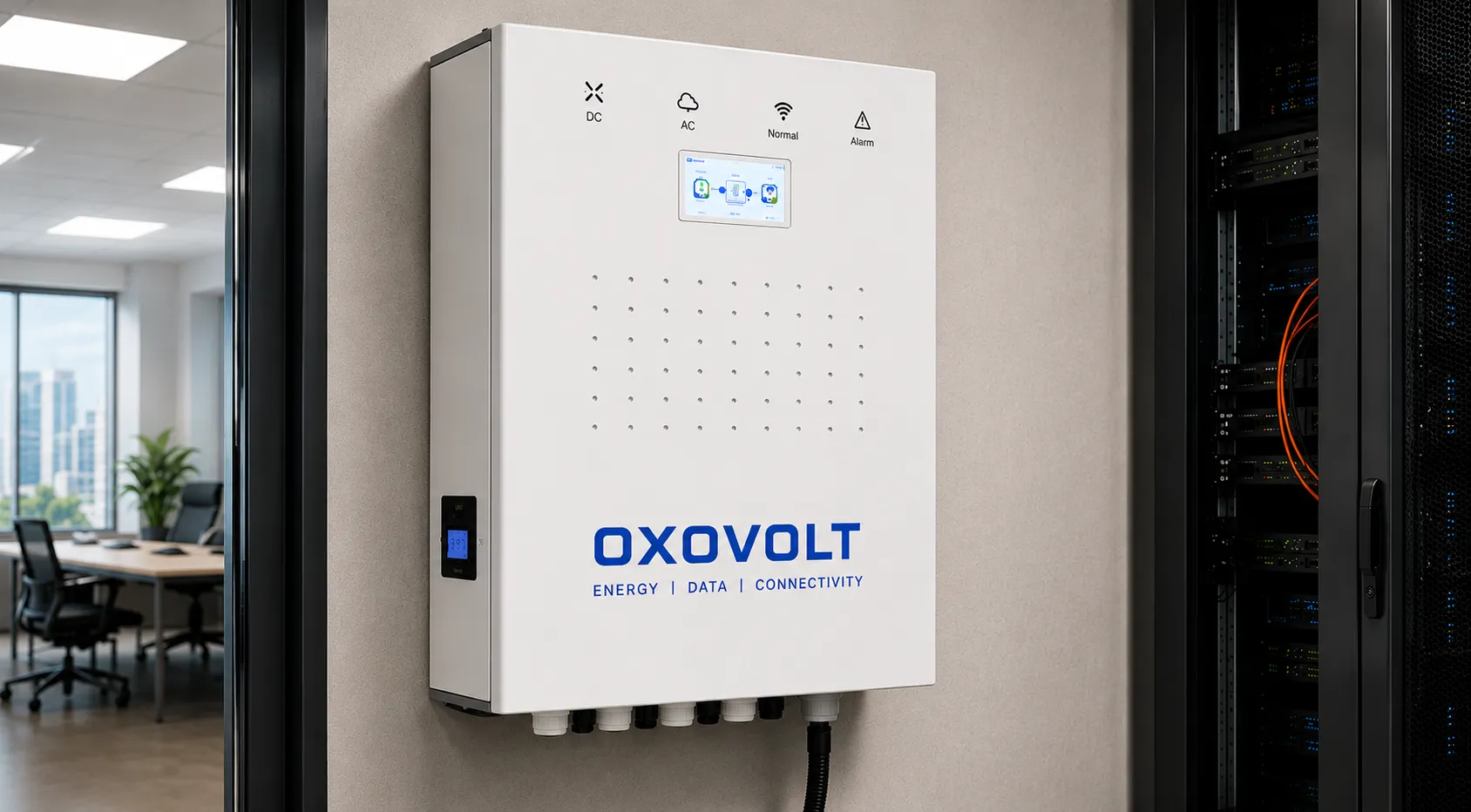
Every summer the same idea comes back: the hotter it gets, the more the panels produce. It is false — and the gap between belief and physics is where a battery earns its place.
A photovoltaic cell converts light, not heat. Above roughly 25°C its efficiency drops by a fraction of a percent for every additional degree, so a 40°C roof in July can lose a tenth of its rated output at the exact moment the grid needs it most.
Two curves that no longer line up
Production peaks around midday. Consumption during a heatwave peaks in the late afternoon and evening, when cooling runs hardest and people come home. Without storage, the surplus is exported at the worst possible price and bought back a few hours later at the best one.
- Midday : maximum production, minimum household demand — the surplus leaves the building.
- Late afternoon : production falls, cooling demand climbs, the meter runs the other way.
- Evening : no production at all, and the grid is at its most expensive.
Storage closes that gap. It also protects the installation against the grid instability that hot spells bring: a building that can run on its own for a few hours simply stops caring about a voltage dip on the street.
Discover the technology